


The World Cup is one of the best reminders that elite performance is never just about what happens during the game.
We see the obvious stuff.
The goals. The sprints. The tackles. The saves. The pressure. The late-game composure. The ability to produce a moment that can change an entire country’s week.
But the part that makes all of that possible usually happens where nobody is watching.
In a hotel room, or on a recovery table, or during a team meal, or in the first hour after waking up.
In the quiet decision to protect sleep when the tournament is asking for everything else.
That is what makes the World Cup such an interesting sleep and recovery case study. The athletes are not only trying to be great for one match. They are trying to stay physically and mentally ready for weeks across different venues, climates, travel schedules, kickoff times, and hotel rooms that do not feel like home.
For fans, the sleep disruption is much smaller but still familiar. Late kickoffs turn into extra time. Extra time turns into penalties. Penalties turn into another 30 minutes of reading reactions and watching highlights. Suddenly the alarm feels much more aggressive than it should.
For the players, the sleep challenge is much more serious.
Why the 2026 World Cup Is Such a Recovery Challenge
The 2026 World Cup is the largest men’s World Cup ever, with 48 teams and 104 matches across Canada, Mexico, and the United States. That creates a different type of tournament from the compact versions fans may be used to. The expanded field and three-country footprint mean more teams, more matches, more movement, and a much bigger recovery challenge across the tournament. [1]
A normal club season already puts enormous stress on professional footballers. The calendar is long. Travel is constant. Many top players arrive at international tournaments after months of league matches, cup competitions, European fixtures, national team windows, media obligations, and limited time off.
Then the World Cup asks them to do something even more specific: stay ready in a short, intense window where one poor performance can end the tournament.
That is a hard recovery problem.
Some teams arrive after crossing a large number of time zones just to reach their base camps. Once the tournament begins, many do not stay in one place. They move between cities, stadiums, climates, and hotel environments. Australia’s group-stage route, for example, included Vancouver, then Seattle six days later, then Santa Clara six days after that. Each stop means a new room, a new bed, a new stadium, a new routine, and another chance for sleep to get disrupted. [2]
That may sound like a small inconvenience. For elite athletes, small inconveniences matter.
At the highest level, the difference between sharp and flat can be tiny. A slightly slower reaction. A little less burst late in the match. A little more soreness. A little less emotional control. A little worse decision-making in the final third.
Those things can decide games.
Travel Fatigue vs. Jet Lag
When people talk about athletes traveling, they often use “jet lag” as a catch-all term. But travel fatigue and jet lag are not exactly the same thing.
Travel fatigue can happen with almost any trip. It comes from the general stress of moving: airports, buses, dehydration, sitting for long periods, disrupted meals, sleeping in a new place, and simply being out of your normal routine.
Jet lag is more specific. It happens when your internal clock is out of sync with the local time after crossing time zones. Stanford sleep researchers explain that the circadian system shifts slowly, roughly about an hour per day, which is why a multi-time-zone trip can leave the body lagging behind the schedule it is supposed to perform on. [3]
That matters for the World Cup because athletes may be asked to train, eat, sleep, recover, and compete on a schedule their body has not fully adjusted to yet.
Research on elite athletes backs this up. One study of national-level track cyclists found that long-haul eastward travel reduced time in bed, total sleep time, sleep efficiency, and perceived sleep quality, especially in the 48 hours after travel. The researchers also found increased fatigue going to bed and recommended that long-haul travel schedules allow athletes adequate time to recover before competition. [4]
That 48-hour window is important. In a tournament setting, 48 hours can be a huge percentage of the time between matches.
Players may technically have several days between games, but those days are not empty. They include travel, recovery, tactical meetings, media, training, meals, treatment, and preparation for the next opponent.
Late Games Make Sleep Harder
A late World Cup match creates a very specific sleep problem.
The body does not simply shut down when the final whistle blows.
A player may finish the match physically exhausted but mentally wired. Heart rate is elevated. Body temperature is up. Adrenaline is still moving. There may be media obligations, recovery sessions, team meetings, treatment, food, hydration work, and a bus ride back to the hotel.
Then the athlete is supposed to fall asleep.
Anyone who has played a late game, finished a hard workout too close to bedtime, or stayed up late watching a high-stress match understands some version of this. The body can be tired while the brain is still very awake.
The Socceroos gave a good example earlier in the tournament. After a late match in Vancouver, Australia’s players traveled through the night and did not get back to their hotel rooms in Oakland until around 5am. Connor Metcalfe said he had only gotten about four or five hours of sleep and felt “pretty knackered,” while the team shifted its focus toward recovery before its next match. [5]
That is the hidden cost of a tournament. The match ends, but recovery has barely started.
Heat, Hydration, and the Recovery Stack
Travel and timing are only part of the problem.
The 2026 World Cup also puts players in very different climates. A team might move from a cooler West Coast city to a hot, humid stadium in the South or Mexico. Heat adds another layer of stress because the body has to manage performance and temperature regulation at the same time.
That means hydration is not just a general wellness habit. It becomes a performance variable.
Reuters reported that fatigue and recovery were central concerns for Norway before their knockout match against Brazil. Sports physiologist Dom Rae noted that players are dealing with accumulated fatigue from long seasons and tournament stress, and he defended hydration breaks as meaningful performance tools because players are losing fluids, electrolytes, and sugars while games are getting harder. [6]
That is the recovery stack at work.
Sleep matters. Hydration matters. Nutrition matters. Cooling matters. Psychological recovery matters. Movement matters. Travel timing matters.
At the elite level, recovery is not one thing. It is a system.
And sleep is usually the foundation of that system.
The Erling Haaland Sleep Routine
Erling Haaland is one of the most interesting examples because his routine is both extreme and surprisingly simple.
A lot of the attention around Haaland focuses on the obvious: his size, strength, speed, finishing, and almost strange ability to appear exactly where the ball ends up. During this World Cup, that attention has only grown. He scored twice against Brazil to help Norway reach its first World Cup quarterfinal, and his form has made his preparation an even bigger part of the story. [7]
When you read about his routine, the sleep piece stands out.
Haaland has called sleep “maybe the most important thing in life,” adding that it is not only about getting a lot of sleep, but getting good sleep. His routine includes habits that sound familiar to anyone who follows sleep science: morning walks for daylight and fresh air, limiting blue light in the evening, and building his day around nutrition, mobility, recovery, and sleep. [8]
The line that sticks is his broader philosophy.
“You need to be a 24/7 athlete; it’s not just the two hours of the game,” Haaland said in a video about his routine. He described the 90 minutes on the field as the result of everything else he does: how he sleeps, how he prepares for the next training session, how he prepares for the next game, and how he recovers afterward. [9]
That is the part regular people can actually learn from.
Most of us do not need to copy every detail of Haaland’s routine. We do not need to eat like him, train like him, use every recovery tool he uses, or pretend our lives are built around scoring against Brazil.
But the mindset is useful because he treats sleep as part of the work.
Sleep and Athletic Performance
There is a reason serious athletes pay attention to sleep.
Sleep affects reaction time, mood, decision-making, pain tolerance, learning, memory, immune function, hormone regulation, and the body’s ability to recover from stress. For footballers, that matters everywhere: pressing, sprinting, tracking runners, judging timing, staying composed, and making good decisions while fatigued.
One of the most famous athlete sleep studies came from Stanford, where researchers asked men’s college basketball players to extend their sleep over several weeks. By the end of the sleep-extension period, the players ran faster sprints, improved free throw accuracy by 9%, improved three-point accuracy by 9.2%, reported less fatigue, and said practices and games felt better. [10]
That study was basketball, not soccer. It was also a small study. But the broader point is still useful.
Even high-level athletes can be leaving performance on the table because they are not sleeping enough.
That is one of the most important lessons here. Sleep is not only about avoiding exhaustion. It can also be part of improving the quality of performance.
And that applies well beyond professional sports.
What World Cup Athletes Can Teach the Rest of Us
Most people are not preparing for a World Cup knockout match.
But most people are trying to show up for something.
A workout. A race. A job. A long day with kids. A hard conversation. A creative project. A stressful week. A season of life where a lot is being asked of them.
The stakes are different, but the pattern is familiar. We expect our bodies and brains to perform, then treat sleep as the first thing to cut when life gets full.
The best athletes do the opposite.
They protect the inputs that make performance possible.
That does not mean regular people need a professional recovery staff. It does not mean every night has to be perfect. It does not mean you need to become obsessive or build your entire identity around sleep.
But it does mean there are some useful habits worth borrowing.
1. Treat sleep as preparation
Most people think of sleep as what happens after the day is over.
Athletes treat sleep as part of preparing for tomorrow.
That is a small mental shift with a big impact. If tomorrow matters, tonight matters too. A hard workout, an important meeting, a race, a long travel day, or a demanding stretch with family all become easier to handle when sleep is part of the plan instead of whatever is left after the plan falls apart.
2. Get morning light
Morning light is one of the strongest cues for your circadian rhythm. It tells your body that the day has started and helps anchor the timing of alertness and sleep later on.
That is why morning light shows up in athlete routines like Haaland’s. It is simple, free, and powerful when done consistently.
You do not need to overcomplicate it. Get outside in the morning when you can. Even a short walk helps reinforce the rhythm your body is trying to follow.
3. Be more careful with late light
Evening light, especially bright light from screens, can make it harder for the body to wind down. Athletes who limit blue light at night are trying to protect the transition into sleep.
For regular life, this might mean dimming the lights, moving away from your phone earlier, or at least being honest about whether scrolling in bed is helping or hurting.
Late World Cup games may be worth it sometimes. Doomscrolling for another 45 minutes probably is not.
4. Make the bedroom do its job
A good sleep environment is cool, dark, quiet, and comfortable.
This sounds basic because it is. But basic does not mean unimportant.
For athletes sleeping in hotel rooms, the environment changes constantly. At home, most of us have more control. Room temperature, light, noise, mattress, bedding, and pillow all affect how easy it is for the body to settle in and stay asleep.
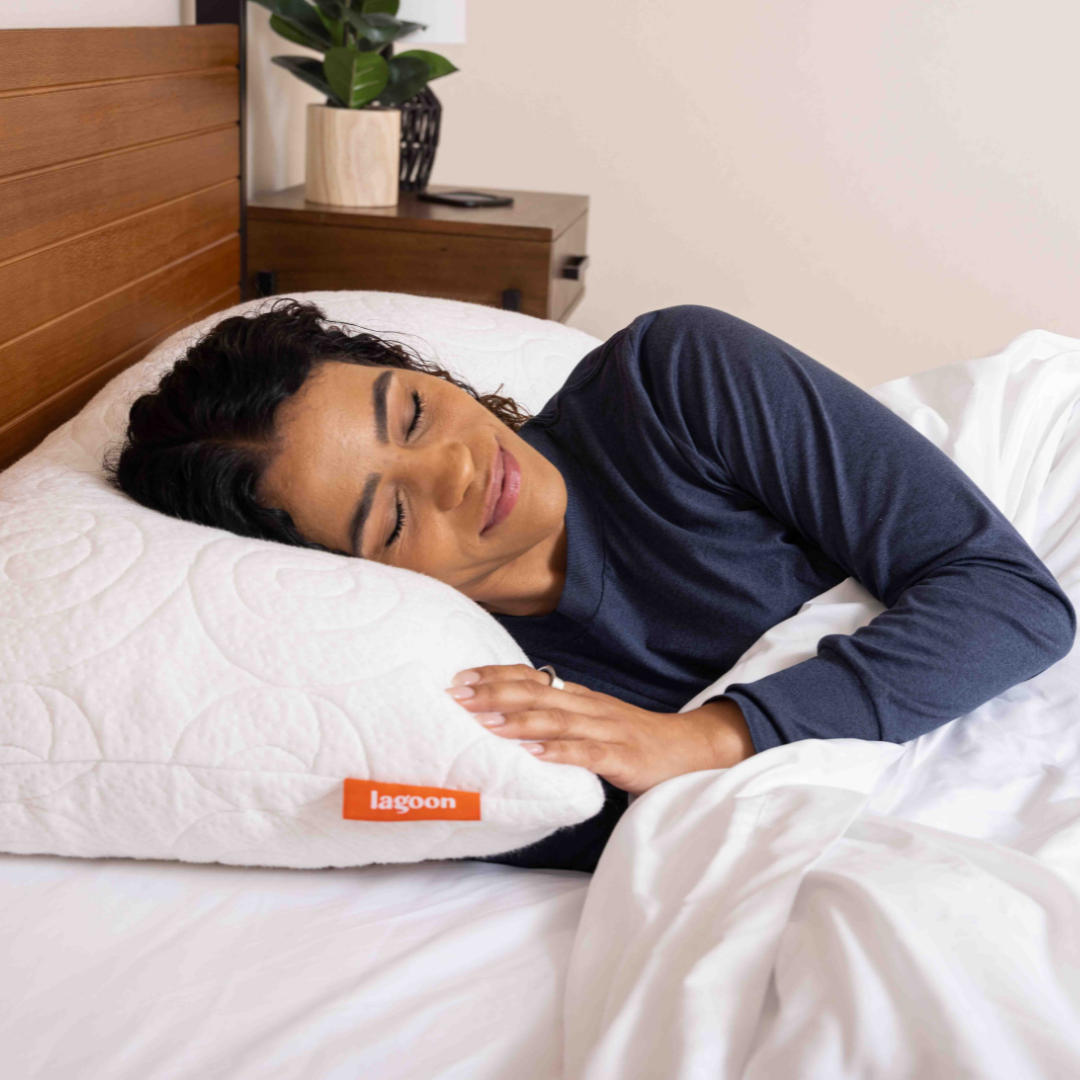
The pillow matters because alignment matters. If your head and neck are not supported well, comfort suffers. If comfort suffers, sleep quality can suffer too.
5. Build recovery into hard stretches
During a tournament, teams do not wait until the players are falling apart to think about recovery. They build it into the schedule.
That is a useful lesson for normal life.
If you know a week is going to be demanding, plan recovery before you need it. Protect one early night. Take the nap if you can. Hydrate more intentionally. Get outside. Do the easier workout instead of forcing the hard one. Create some buffer.
Recovery works better when it is part of the rhythm, not only a rescue plan after you are already cooked.
Fans Need Recovery Too
One funny part of the World Cup is that the fans need a recovery plan as well.
Obviously, staying up to watch a match is not the same as playing in one. The physical and emotional load is not even close.
But sleep loss still counts.
If you stay up late for a big game, the next day will probably ask something of you anyway. Work does not care that the match went to penalties. Kids do not care that extra time finished after midnight. Your alarm does not care that you needed one more round of highlights.
That does not mean you should never stay up for something fun. The World Cup is supposed to be fun.
But stacking late nights without any plan is where the problem starts.
So borrow the athlete mindset in a very normal way.
Sleep in when you can. Get morning light when you wake up. Hydrate. Move your body a little. Avoid turning one late night into three. Make the next night count.
Enjoy the tournament, but do not act surprised when your body asks for repayment.
The Bigger Lesson
We watch World Cup athletes and obsess over what they do on the field.
We copy their footwork. We buy their boots. We talk about their training, their tactics, their mentality, and their ability to handle pressure.
But the thing that makes so much of that possible happens before the cameras are on.
It happens in the way they sleep, eat, recover, travel, prepare, and protect the boring parts of performance.
The best athletes in the world understand that performance is not only built during the visible moments. It is built in the hours around them.
Most of us are not going to score against Brazil.
But we can keep a more consistent schedule. We can get morning light. We can make the room cooler and darker. We can be more thoughtful about late screens. We can build a sleep setup that supports our body instead of fighting it. We can stop treating sleep as the first thing to cut when life gets busy.
At Lagoon, that is the part we care about.
Better sleep is not just about feeling less tired. It is about giving your body a better chance to recover, adapt, think clearly, and show up again tomorrow.
World Cup athletes are pros at what they do with a ball at their feet.
It might be worth paying attention to what they do with their head on a pillow too.
Sources
[1] FIFA’s official World Cup pages confirm the tournament is hosted across Canada, Mexico, and the United States, and FIFA’s schedule page covers the 104-match structure.
[2] The Australia travel example comes from the travel-fatigue analysis you referenced and is also echoed in HMMR Media’s World Cup travel-fatigue breakdown, which notes Australia’s Vancouver, Seattle, and Santa Clara route.
[3] Stanford sleep researchers explain that the circadian system shifts slowly, roughly about an hour each day after crossing time zones, and distinguish travel fatigue from jet lag.
[4] A 2023 study on elite athletes and long-haul travel found reductions in time in bed, total sleep time, sleep efficiency, and sleep quality, especially in the 48 hours after travel.
[5] The Guardian reported that Australia’s players did not get back to their hotel rooms until around 5am after late-night World Cup travel, with Connor Metcalfe saying he got about four or five hours of sleep.
[6] Reuters reported on Norway’s fatigue and recovery concerns before Brazil, including comments about chronic fatigue, 48- to 72-hour fatigue markers, hydration breaks, and psychological recovery.
[7] Euronews reported that Haaland scored twice against Brazil to put Norway into its first World Cup quarterfinal.
[8] Business Insider covered Haaland’s routine, including his sleep quote, morning daylight walks, blue-light glasses, and emphasis on recovery.
[9] Euronews quoted Haaland saying you need to be a “24/7 athlete” and describing the 90 minutes on the field as the result of how he sleeps, prepares, and recovers.
[10] Stanford’s basketball sleep-extension study found faster sprint times, improved free throw accuracy, improved three-point accuracy, lower fatigue, and better reported practices and games after players extended sleep.