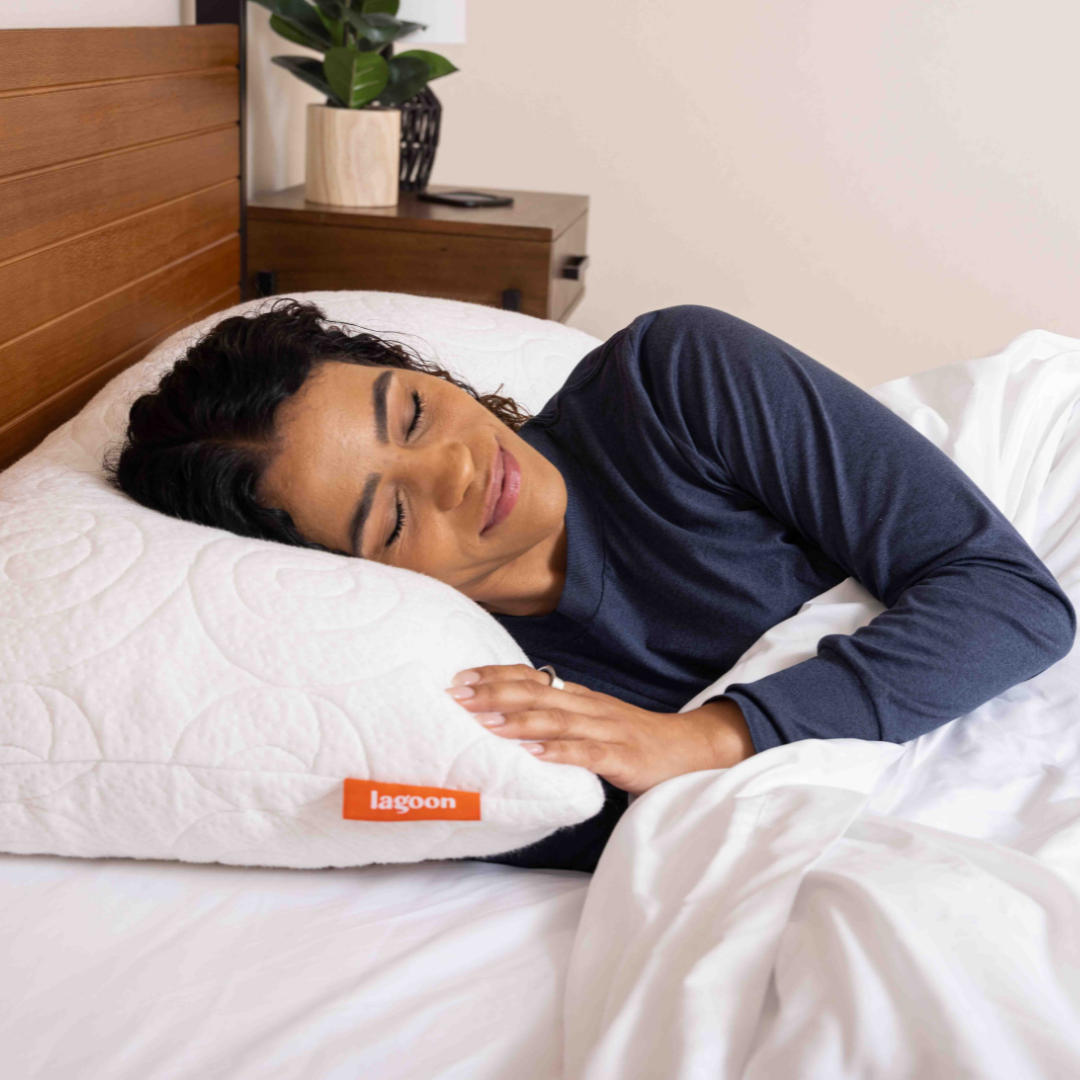



Most people have heard that a cool bedroom is better for sleep.
The surprising part is how cool the standard recommendation can be.
The National Sleep Foundation recommends a bedroom temperature between 60 and 67 degrees Fahrenheit to help promote sleep. Other sleep resources land a little warmer, often around the mid-to-high 60s. Either way, the point is clear: your body generally sleeps better when the room is cooler than most people keep it during the day. [1][2]
If you set your thermostat to 60 tonight, you might be shocked by how cold that feels.
That is partly why temperature is such an interesting sleep variable. People understand the idea in theory. They know overheating feels bad. They know kicking off the covers, flipping the pillow, and waking up sweaty probably isn’t helping.
But many people still underestimate how directly temperature affects the process of falling asleep and staying asleep.
Cooling is not just about comfort.
It is part of the biology of sleep.
Why Body Temperature Matters for Sleep
Your body does not fall asleep by accident.
As evening approaches, your circadian rhythm starts preparing you for sleep. Melatonin rises. Alertness drops. Your core body temperature begins to decline.
That temperature drop is not just a side effect of getting sleepy. It is part of the sleep process itself.
A major review on sleep and thermoregulation explains that core body temperature starts to decrease about two hours before sleep under circadian control. The same review notes that the first bout of non-REM sleep is most likely when the rate of body temperature decline is highest. [3]
That is a useful way to think about it.
Your body is not simply waiting to get tired. It is actively shifting into a thermal state that makes sleep more likely.
To do that, it has to move heat away from the core. A lot of that heat leaves through the skin, especially through the hands and feet. Blood vessels near the skin widen, warm blood moves outward, and heat can dissipate into the environment.
This is one reason warm feet can help people fall asleep. It sounds backwards at first, but warming the skin can help encourage blood flow to the surface, which can support heat loss from the core. A 2019 systematic review and meta-analysis found that a warm bath or shower one to two hours before bed was associated with faster sleep onset and better subjective sleep quality. [4]
The goal is to help your body release heat before sleep.
What Happens When the Room Is Too Warm
A warm room can interfere with the body’s natural cooling process.
If the air around you is hot, humid, or trapped under heavy bedding, your body has a harder time moving heat away from the core. Instead of settling into sleep, you may feel restless, sweaty, or slightly uncomfortable without fully knowing why.
The research supports that pattern.
A 2012 review in Journal of Physiological Anthropology described the thermal environment as one of the key determinants of sleep because thermoregulation is closely linked with sleep regulation. The authors note that excessively high or low ambient temperatures can affect sleep even in healthy people without insomnia. [5]
More recent real-world research points in the same direction. A 2024 systematic review found that higher indoor or outdoor temperatures are generally associated with worse sleep quality and quantity across sleep measures, with stronger effects during the hottest months and days. [6]
That last part is especially relevant in August.
Summer sleep can get worse because nights stay warm. The problem is not only that the day was hot. It is that the bedroom never cools down enough for the body to do what it wants to do at night.
That can show up as longer sleep onset, more restlessness, more wake-ups, and less restorative sleep.
Is 60 to 67 Degrees Really the Best Sleep Temperature?
The 60 to 67 degree recommendation is helpful, but it should not be treated like a law of nature.
People vary. Bedding varies. Pajamas vary. Mattresses and pillows vary. Some people run hot. Some people run cold. Older adults may have different thermal comfort needs. One study of adults 65 and older found sleep was most efficient and restful in a warmer range of 68 to 77 degrees Fahrenheit, with sleep efficiency dropping as temperatures rose from 77 to 86 degrees. [7]
So the practical answer is more nuanced.
For many adults, a cooler room helps. The National Sleep Foundation’s 60 to 67 degree range is a good benchmark. Sleep Foundation’s guidance lands closer to 65 to 68 degrees. [1][2]
But the best temperature for you is the one that lets your body fall asleep easily, stay asleep, and avoid waking up too hot or too cold.
That means you should think about the whole sleep environment, not just the thermostat.
The air temperature matters.
So do your sheets, comforter, pajamas, mattress, pillow, humidity, airflow, and whether your partner sleeps hot or cold.
The real question is simple: does your setup help your body release heat, or does it trap heat around you all night?
Too Hot Is Usually Harder to Solve Than Too Cold
Cold can disrupt sleep too. Anyone who has tried to sleep in a freezing room without enough blankets knows that.
But in many real bedrooms, heat is the bigger problem.
A cooler room gives you options. You can add a blanket. Wear warmer pajamas. Use socks. Adjust layers.
A hot room gives you fewer places to go. Once the bedding, pillow, mattress, and room are holding heat, you can end up stuck in a loop of flipping the pillow, moving around, pushing off covers, pulling them back on, and waking up again.
Some research suggests that bedding can buffer cooler environments better than warmer ones. A review on sleepwear and bedding noted prior findings showing no significant differences in sleep variables across an ambient range of 13 to 23 degrees Celsius, roughly 55 to 73 degrees Fahrenheit, when bedding and sleepwear were part of the sleeping setup. [8]
That does not mean cold never matters. It means the sleep microclimate - the temperature and humidity around your body under the covers - can matter as much as the thermostat.
That is exactly why hot sleepers often struggle.
They may set the room to a reasonable temperature but still overheat because the mattress, pillow, or bedding traps warmth close to the body.
Why Cooling Has Become Such a Big Sleep Category
Temperature has quietly become one of the biggest stories in sleep.
Eight Sleep, a company built around temperature-controlled sleep technology, raised $50 million in 2026 at a reported $1.5 billion valuation. The company’s core product is essentially built around one idea: if you can control the temperature of the bed, you may be able to improve sleep. [9]
That is a lot of money riding on temperature.
And it makes sense.
Unlike many sleep problems, temperature is something people can feel immediately. When you sleep hot, you know it. When the room is too warm, you know it. When your pillow stays cool, you notice. When you wake up sweaty, you notice.
We see the same thing at Lagoon.
Two-thirds of our sleep quiz respondents say they sleep hot, and 36% list temperature as a key concern they are trying to address.
That is why cooling is built directly into the Otter and why we went even further with the Polar Bear. People do not want sleep theory at 2am. They want to stop overheating.
A pillow is only one input, but for hot sleepers it can be an important one. Your head and neck are in contact with the pillow all night. If the pillow traps heat, the bed can feel warm even when the room is relatively cool.
Does Cooling Improve Deep Sleep and REM Sleep?
This is where it is worth being careful.
A cooler sleep environment can support better sleep because it helps your body maintain the temperature conditions that promote sleep. Heat, especially excessive heat, is associated with worse sleep quality and shorter sleep. [5][6]
But that does not mean colder is always better, or that one magic temperature will maximize deep sleep and REM for everyone.
Sleep stages are influenced by many variables: sleep timing, age, stress, alcohol, caffeine, exercise, illness, light exposure, total sleep duration, and individual physiology. Temperature is one powerful input among many.
The more honest claim is this:
If heat is fragmenting your sleep, cooling your environment can help your body stay asleep more comfortably, and that may give you a better chance at more restorative sleep.
That is still a big deal, especially if you already know you sleep hot.
How to Sleep Cooler Tonight
You do not need to buy a temperature-controlled bed to start testing this.
A few simple changes can make a difference quickly.
Drop the thermostat before bedtime
Do not wait until the moment you get in bed.
If your bedroom is warm from the day, it can take time for the room, bedding, and mattress to cool. Try lowering the temperature 60 to 90 minutes before bed so the room is already cooler when you climb in.
This is especially useful in summer, when walls, upstairs bedrooms, and bedding can hold heat long after sunset.
Take a warm shower 60 to 90 minutes before bed
This sounds backwards, but it fits the physiology.
A warm shower or bath raises skin temperature and encourages blood flow to the surface. Afterward, your body can release heat more efficiently, which helps core body temperature drop. The 2019 meta-analysis found that warm bathing or showering one to two hours before bed was associated with faster sleep onset and better subjective sleep quality. [4]
The timing matters. Right before bed may leave you feeling too warm. About an hour or two before bed gives your body time to cool down afterward.
Use airflow strategically
A fan can help by moving heat away from the body.
Pointing airflow toward the lower body or feet can be useful because the hands and feet play an important role in heat dissipation. You do not need to blast yourself all night. The goal is to help warm air move away instead of getting trapped around you.
Lighten the bedding
Heavy bedding can trap heat even in a cool room.
If you wake up hot, experiment with lighter layers, more breathable sheets, or a different comforter. The thermostat may not be the whole problem. The heat may be trapped under the covers.
Look at the pillow
Hot sleepers often focus on the mattress and forget the pillow.
But your head and neck rest on the pillow for hours. If that surface traps warmth, it can make the whole sleep setup feel hotter. A cooler pillow surface may help reduce that constant need to flip the pillow looking for the cold side.
This is one of the reasons cooling pillows and cooling pillowcases have become so popular. They address a very specific, very annoying problem: heat right where you are trying to settle down.
Watch humidity
A room can feel much warmer when humidity is high.
Humidity makes it harder for sweat to evaporate, which makes cooling less efficient. In hot, humid climates or upstairs bedrooms, a dehumidifier or better airflow can sometimes help even without changing the thermostat much.
The Best Temperature Is the One You Can Sustain
It is tempting to turn temperature into another perfect number to chase.
But sleep does not work that cleanly.
For many people, 60 to 67 degrees is a strong target range. For others, especially older adults or people who get cold easily, that may be uncomfortable. Some people sleep best closer to 68 or 69. Others need the room colder because their mattress, bedding, partner, or body runs hot.
The goal is not to win the thermostat.
The goal is to create the conditions where your body can fall asleep, stay asleep, and recover.
A good test is how you feel across the night:
Do you fall asleep faster when the room is cooler?
Do you wake up less often?
Do you stop flipping the pillow?
Do you stop kicking off the covers?
Do you feel more rested in the morning?
If the answer is yes, you probably found a useful lever.
The Bottom Line
Cooling really does matter for sleep.
Your body needs to release heat as it prepares for sleep. A cooler room helps that process. A warm room can block it, making it harder to fall asleep and easier to wake up during the night.
The exact number is individual, but the direction is clear: if you sleep hot, cooling your sleep environment is one of the most practical changes you can make.
Set the room earlier. Use airflow. Take a warm shower an hour or two before bed. Lighten the bedding. Pay attention to humidity. Make sure your pillow is not working against you.
At Lagoon, this is why we built cooling directly into pillows like the Otter and pushed it even further with the Polar Bear. If temperature is one of the variables disrupting your sleep, your pillow should help solve the problem, not add to it.
If you’ve been chasing better deep sleep this summer, the thermostat is one of the few variables you can change tonight and feel tomorrow.