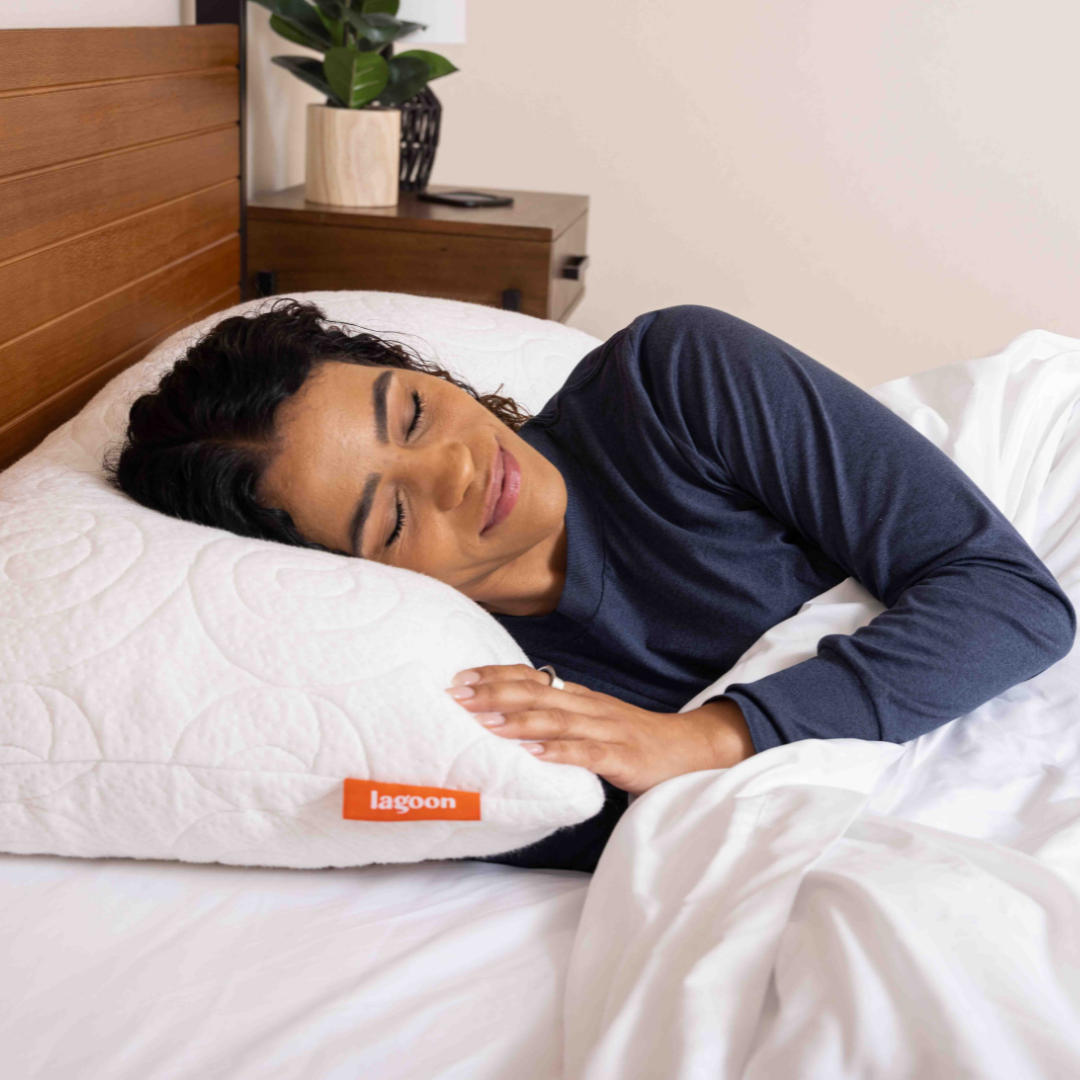



There’s a specific feeling that shows up after you’ve been underslept for a while and then **finally** get a real night of sleep.
You wake up and feel more than just “rested.” You feel sharper, lighter... and more emotionally stable. Sometimes even a little more energized than you do after an ordinary good night.
If you’ve gone through a stretch of broken sleep with a newborn, a deadline-heavy week, a travel block, or a few too many late nights in a row, you probably know the feeling. It almost feels disproportionate to the number of hours you got. Like your body is doing more with that one night than it usually does.
That’s not in your head - that's your brain has been keeping score the entire time.
Your Brain Does Not Treat Sleep Loss as Random
One of the core ideas in sleep science is that sleep is regulated not just by your circadian rhythm, but also by sleep homeostasis - the biological process that tracks how long you’ve been awake and how much sleep pressure has built up. The longer and more intensely you’re awake, the stronger the drive to sleep becomes. When sleep gets cut short, that pressure does not simply disappear. It carries forward.
That is why poor sleep accumulates. But it is also why recovery sleep can feel so powerful.
When your sleep has been restricted, your body does not just shrug and start over the next day. It begins prioritizing the parts of sleep that matter most, especially deep non-REM sleep early in the recovery period and, depending on the kind and duration of deprivation, additional REM sleep as well. StatPearls summarizes this well: shorter deprivation tends to increase non-REM sleep first, while more prolonged deprivation increases both non-REM and REM sleep, and very long deprivation can produce marked REM rebound.
That’s the rebound.
Why the First Good Night Can Feel So Dramatically Better
The phrase “sleep rebound” gets used loosely, but the mechanism is pretty straightforward.
Deep sleep is one of the primary targets of homeostatic regulation. As wakefulness accumulates, so does the pressure for deep sleep. That is why the first recovery night after a rough stretch often feels so disproportionately restorative. Your body is no longer aiming for an average night. It is trying to correct a deficit. Recent work on recovery sleep describes this as a corrective process in which sleep duration and sleep intensity rise in response to prior restriction.
REM rebound works similarly, though it tends to be discussed more often in the context of REM-specific deprivation, stress, alcohol, antidepressant withdrawal, or obstructive sleep apnea treatment. REM rebound is characterized by temporarily increased REM sleep, more intense REM periods, and often more vivid dreams. That matches what many people notice in real life after a rough stretch: they start dreaming more, or at least remembering those dreams more clearly, once recovery sleep finally arrives.
So when you come out of a bad week and one solid night suddenly feels amazing, it is not because your body “forgot” the deficit. It is because your body is actively responding to it.
New Parents Feel This Quickly Because the Contrast Is So Extreme
This is one reason the newborn phase makes the rebound effect so obvious.
With a new baby, sleep is fragmented in a way that feels qualitatively different from just going to bed late. The problem is not only fewer total hours. It’s the repeated interruptions, the uncertainty, and the mental posture of always being partly on call.
That kind of sleep fragmentation has measurable cognitive consequences. StatPearls notes that sleep deprivation and sleep fragmentation impair mood, executive function, cognitive performance, and memory consolidation, and that the deficits accumulate over time.
So when a baby unexpectedly strings together a longer stretch and you finally get one uninterrupted night, the contrast is sharp. You are not just noticing “more sleep.” You are noticing what your brain feels like when it’s no longer spending the whole night and the whole next day compensating.
That said, the rebound effect is not limited to new parenthood at all. It applies just as much after:
- a week of deadline-driven late nights
- travel that breaks your rhythm
- a hard training block
- illness
- caring for a sick child
- or any stretch where life simply stops cooperating
Your brain does not care whether the sleep loss came from a crying infant or a launch week. It still tracks the debt.
Why Deep Sleep Seems to Rebound First
One of the more interesting pieces of sleep physiology is that not all sleep stages are treated equally during recovery.
Deep sleep, especially slow-wave sleep, appears to be the most tightly homeostatically regulated. In practical terms, that means it is often the first thing your brain tries to restore when you have been underslept. REM can rebound too, but the first recovery night often feels especially physically grounding because of that fast return of deep sleep pressure.
This is part of why one good night can feel so dramatically different even if you are not fully “caught up.” The body is preferentially repairing what was most acutely missing.
It is also why people often say things like, “I still haven’t fully recovered, but that one night changed everything.” They are usually right.
But No, There Isn’t a Perfect Refund
This is where people tend to get overly optimistic.
Recovery sleep is real, but it is not a perfect hour-for-hour refund. You cannot sleep five hours a night for a week, then crash for 12 or 14 hours on Saturday and assume the whole thing is erased. Sleep debt is not that neat. Chronic restriction creates cognitive, emotional, metabolic, and circadian disruption that may improve quickly with recovery sleep, but not always completely or immediately. Research on the dynamics of recovery sleep suggests that some functions recover faster than others and that repeated restriction can create deficits that linger longer than people expect.
That is important, because the rebound effect can be so dramatic that it tricks people into thinking one good night solved everything. In reality, one recovery night often closes a lot of the gap quickly, but a run of consistent nights is what usually restores the full picture.
So yes, take the win... But do not waste the next two nights celebrating the first one.
Why This Matters for Mood and Mental Performance
Sleep rebound is not just about feeling less tired.
Sleep deprivation affects executive function, hippocampal-dependent memory, mood regulation, and emotional resilience. StatPearls notes that sleep loss impairs neurocognition and disrupts hippocampal function, which is important because the hippocampus is central to memory formation and contextual processing. Sleep loss also alters immune and inflammatory markers, another sign that the body treats it as a real physiological problem, not just an inconvenience.
On the flip side, REM rebound and recovery sleep are thought to be adaptive in part because of their role in emotional processing and restoring normal sleep architecture after disruption. REM rebound has been linked in the literature with stress adaptation and with a temporary increase in vivid dreaming as the brain rebalances.
That lines up with how people actually describe recovery nights. They do not just say, “I had more energy.” They say they felt more like themselves.
The Practical Lesson Is Pretty Simple
Once you understand that rebound sleep is real, it changes how you should think about the windows when life finally gives you a break.
The baby slept longer.
The deadline passed.
The travel stretch ended.
The hard training week is over.
Most people waste those windows. They stay up late celebrating, doom-scrolling, or watching one more episode.
They tell themselves they earned a little freedom. And maybe they did.
But if you know your brain has been tracking the deficit the entire time, that recovery window starts to look more valuable. It becomes a moment to cash in, not to burn through.
That doesn’t mean becoming joyless about sleep. It just means recognizing when the opportunity is unusually high leverage.
If you’ve been sleep deprived and a recovery night opens up, use it.
The Bigger Point
The rebound effect is a useful reminder that sleep is not static. It is responsive. Your body is constantly adjusting, constantly tracking, constantly trying to restore balance after disruption. That is reassuring, especially in a season when sleep feels chaotic and out of your control.
It also means your bad stretch is not meaningless. Your body has been paying attention the whole time, and the moment the chance for better sleep arrives, it goes to work.
That does not give you permission to abuse your schedule and expect an easy refund later.
But it should give you some confidence that when life gets messy, your brain is not just taking the hit and moving on. It is trying to recover. And when you finally give it the chance, it often does a lot more than people realize.
So the next time you come through a rough week and wake up after one truly good night feeling dramatically better, don’t dismiss it.
That’s your rebound.