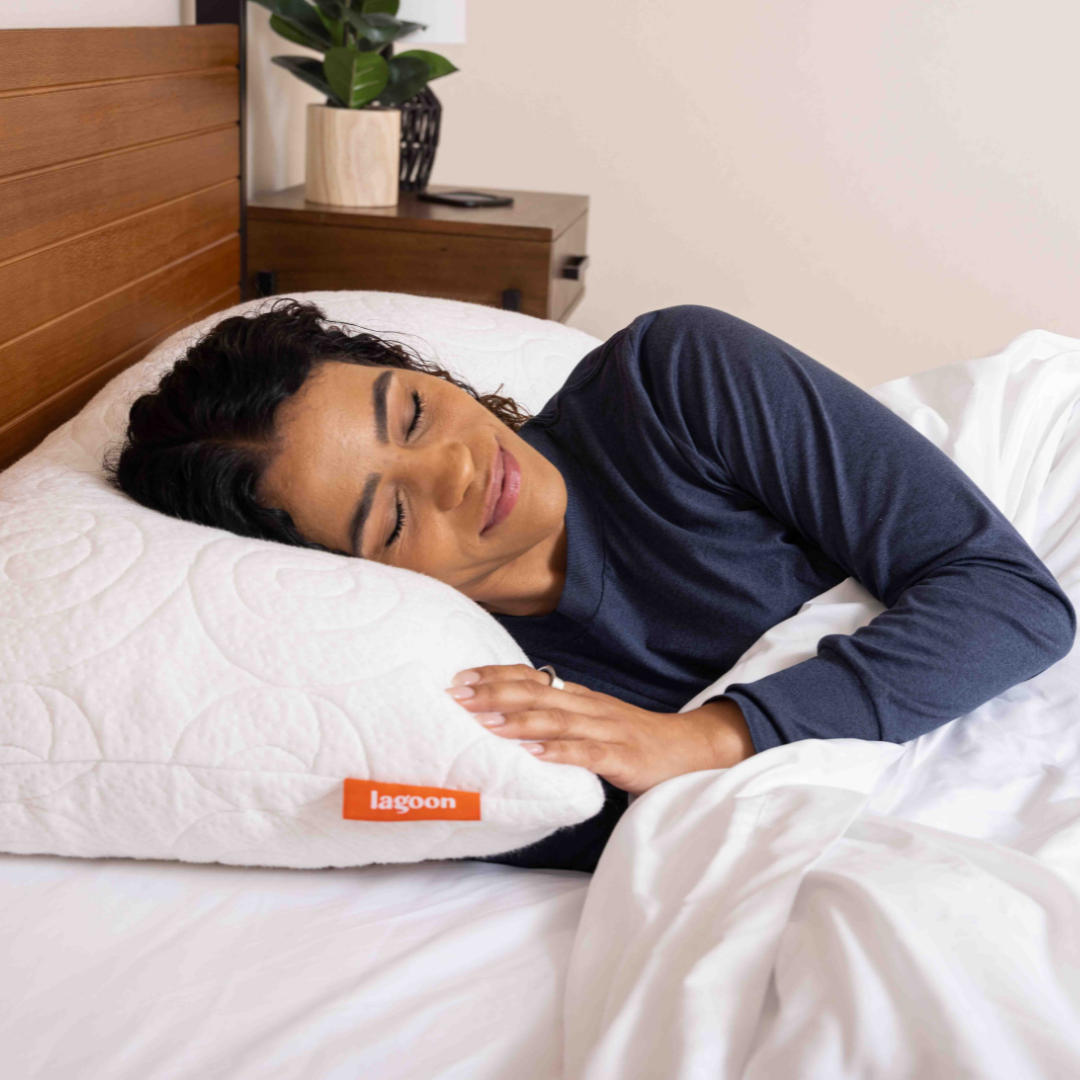



Sleep tracking has exploded.
Devices like Oura, WHOOP, Apple Watch, and Garmin have made it possible to measure sleep in ways that were once reserved for clinical sleep labs. Millions of people now wake up each morning and check a sleep score alongside their heart rate, recovery metrics, and readiness data.
But alongside this rise in data has come a growing debate:
Is tracking your sleep actually hurting your sleep?
Some experts warn that focusing too much on sleep scores can create anxiety, perfectionism, and even worsen insomnia. Others argue that sleep tracking is one of the most powerful tools people have for improving recovery, performance, and long-term health.
The truth sits somewhere in the middle.
And while there are legitimate risks, there’s also a strong contrarian case worth making:
Wanting to be great at sleep is not a bad thing. In fact, it can be incredibly beneficial, if you approach it the right way.
The Rise of Sleep Tracking and Sleep Scores
Consumer sleep technology adoption has surged over the past decade. A 2022 report from the Consumer Technology Association estimated that over one-third of U.S. adults use wearable health tracking devices, with sleep monitoring among the most frequently used features.
These devices combine movement data, heart rate variability, respiratory rate, and sometimes temperature trends to estimate:
-
Total sleep time
-
Sleep efficiency
-
Deep and REM sleep estimates
-
Sleep consistency
-
Recovery or readiness scores
While no consumer device can perfectly replicate clinical polysomnography (the gold standard sleep lab test), research suggests modern wearables are increasingly accurate for identifying sleep duration and general sleep patterns.
A 2022 validation study published in Nature and Science of Sleep found that several commercial wearables demonstrate strong agreement with lab-based sleep measurements for total sleep time and sleep staging trends, making them useful for behavioral tracking over time.
In other words: the data isn’t perfect - but it is directionally valuable, and it's certainly only getting better over time.
The Concern: When Sleep Tracking Backfires
Critics of sleep tracking often point to a condition called orthosomnia.
The term was introduced in a 2017 clinical paper published in the Journal of Clinical Sleep Medicine. Researchers described patients who became so focused on achieving “perfect” sleep scores that they developed anxiety and insomnia-like symptoms when their data looked poor.
Patients would:
-
Spend excessive time trying to improve numbers
-
Become stressed by normal nightly fluctuations
-
Lose confidence in their ability to sleep naturally
-
Create performance anxiety around bedtime
Sleep is unique in that effort can paradoxically make outcomes worse. Trying harder to fall asleep activates alertness systems in the brain, increasing cortisol and sympathetic nervous system activity - the opposite of what sleep requires.
So yes, obsessing over sleep scores can backfire.
But that doesn’t mean striving to improve sleep is the problem.
The Contrarian Truth: Competitiveness Can Be Powerful
High performers are competitive by nature.
Athletes track splits. Executives track productivity metrics. Endurance runners track pace, heart rate, and VO₂ max. Strength athletes track volume and load progression.
Sleep is no different.
A 2021 review in Sleep Medicine Reviews found that behavioral awareness is one of the strongest drivers of sleep improvement. Simply tracking sleep patterns often leads to:
-
Increased consistency in sleep timing
-
Improved bedtime routines
-
Reduced stimulant use before sleep
-
Greater long-term sleep hygiene adherence
Data creates feedback loops. And feedback loops drive behavior change.
The key is understanding how to compete.
Why Sleep Is Different From Other Performance Metrics
You wouldn’t improve as a runner by sprinting every training session.
You wouldn’t improve as a golfer by swinging harder at every shot.
Sleep operates on a similar principle.
You cannot force sleep through effort.
You improve sleep through systems, consistency, and environmental design.
This is where many people misinterpret sleep scores. They treat them as outcomes to chase rather than reflections of behaviors.
Elite performers understand the difference.
Dr. Matthew Walker, neuroscientist and author of Why We Sleep, explains
“The best way to improve sleep is not to focus on sleep itself, but to focus on the behaviors that create the biological conditions for sleep to happen naturally.”
That distinction changes everything.
The Science Behind High-Quality Sleep Habits
Research consistently shows that sleep quality is driven more by behavioral patterns than isolated interventions.
1. Consistent Sleep Timing
Irregular sleep schedules are associated with worse academic performance, mood instability, and reduced sleep efficiency - even when total sleep time remained similar.
Sleep thrives on rhythm.
2. Morning Light Exposure
Morning sunlight plays a critical role in circadian regulation. Exposure to natural light within the first hour of waking helps synchronize the body’s internal clock and supports melatonin release later in the evening.
Individuals receiving regular morning light exposure experience earlier sleep onset and improved sleep consistency.
3. Caffeine and Alcohol Timing
Caffeine has a half-life of approximately 5–7 hours, meaning afternoon consumption can still affect sleep onset and deep sleep architecture.
Alcohol, while often sedating initially, has been shown in multiple studies to fragment sleep and reduce REM cycles.
4. Sleep Environment and Ergonomics
Sleep positioning and spinal alignment significantly influence sleep continuity and overnight recovery.
A 2019 study in the Journal of Physical Therapy Science found that ergonomically appropriate pillows improved sleep quality, reduced neck pain, and enhanced next-day cognitive performance.
What High Performers Get Right About Sleep Tracking
The best sleepers don’t obsess over nightly scores. They track trends. They focus on behaviors they can control rather than outcomes they cannot. They treat sleep like a skill.
Professional endurance athletes and Olympic-level competitors increasingly use sleep data as part of recovery planning, not as a pass/fail grade.
USA Bobsled athlete Josh Williamson explained it simply:
“Weeks I sleep better, I race better. Sleep is one of the few things that directly shows up in performance almost immediately.”
How to Compete With Your Sleep Score the Right Way
If you want to be competitive about sleep - and there is nothing wrong with that. Here’s how to do it intelligently:
Focus on Weekly Trends, Not Nightly Numbers
Sleep naturally fluctuates. Stress, travel, training load, and life variables will affect nightly scores. Long-term averages tell a far more useful story.
Compete on Habits, Not Scores
Track behaviors such as:
-
Bedtime consistency
-
Wake time consistency
-
Wind-down routine adherence
-
Light exposure
-
Stimulant timing
These are controllable. Scores are reflections.
Use Data as Feedback, Not Judgment
Sleep scores should inform curiosity, not anxiety.
Low score? Ask why. High score? Reinforce what worked.
The Psychology of Wanting to Be a Better Sleeper
There’s nothing unhealthy about wanting to optimize sleep.
In fact, research on behavioral change shows that goal orientation improves adherence to healthy routines. When people treat sleep as a skill to improve rather than a passive state, compliance with sleep hygiene practices increases significantly.
Striving for better sleep is no different than striving for improved fitness, nutrition, or mental performance.
It becomes unhealthy only when:
-
Perfection becomes the goal
-
Sleep becomes a source of stress
-
Scores override subjective well-being
The Real Performance Advantage of Great Sleep
Sleep influences nearly every performance metric that matters:
-
Reaction time
-
Decision-making speed
-
Hormonal recovery
-
Muscle repair
-
Mood regulation
-
Injury risk
A landmark Stanford study showed basketball players who extended sleep improved sprint times, shooting accuracy, and overall performance metrics.
Similar findings have been observed across endurance sports, cognitive performance testing, and workplace productivity studies.
A Better Way to Think About Sleep Scores
Instead of asking: “Was my sleep good last night?”
Ask: “Are my habits improving my sleep long term?”
That mindset shifts sleep from something you chase to something you build.
Should You Be Competitive About Sleep?
Yes... if you’re competing the right way.
Striving to become an excellent sleeper is an admirable goal. The best sleepers don’t rely on effort alone. They rely on consistency, thoughtful routines, and environments designed to support recovery.
If you treat sleep like a skill, improvement usually follows.
And when sleep improves, performance often does too.
The Role of Your Sleep Environment
While habits drive most sleep outcomes, physical sleep setup still matters. Pillows and mattresses influence alignment, temperature regulation, and overnight comfort - all factors that contribute to sleep continuity and recovery quality.
If your environment forces your body to compensate overnight, even strong habits may struggle to deliver consistent results.
Final Thought
Sleep is one of the few performance variables that compounds quietly. You don’t always notice it day-to-day, but over weeks and months, it shapes how you train, think, recover, and perform.
If becoming an excellent sleeper is your goal, that’s one worth chasing.
Just make sure it’s a smart goal - measurable, realistic, and built around habits that truly move the needle.