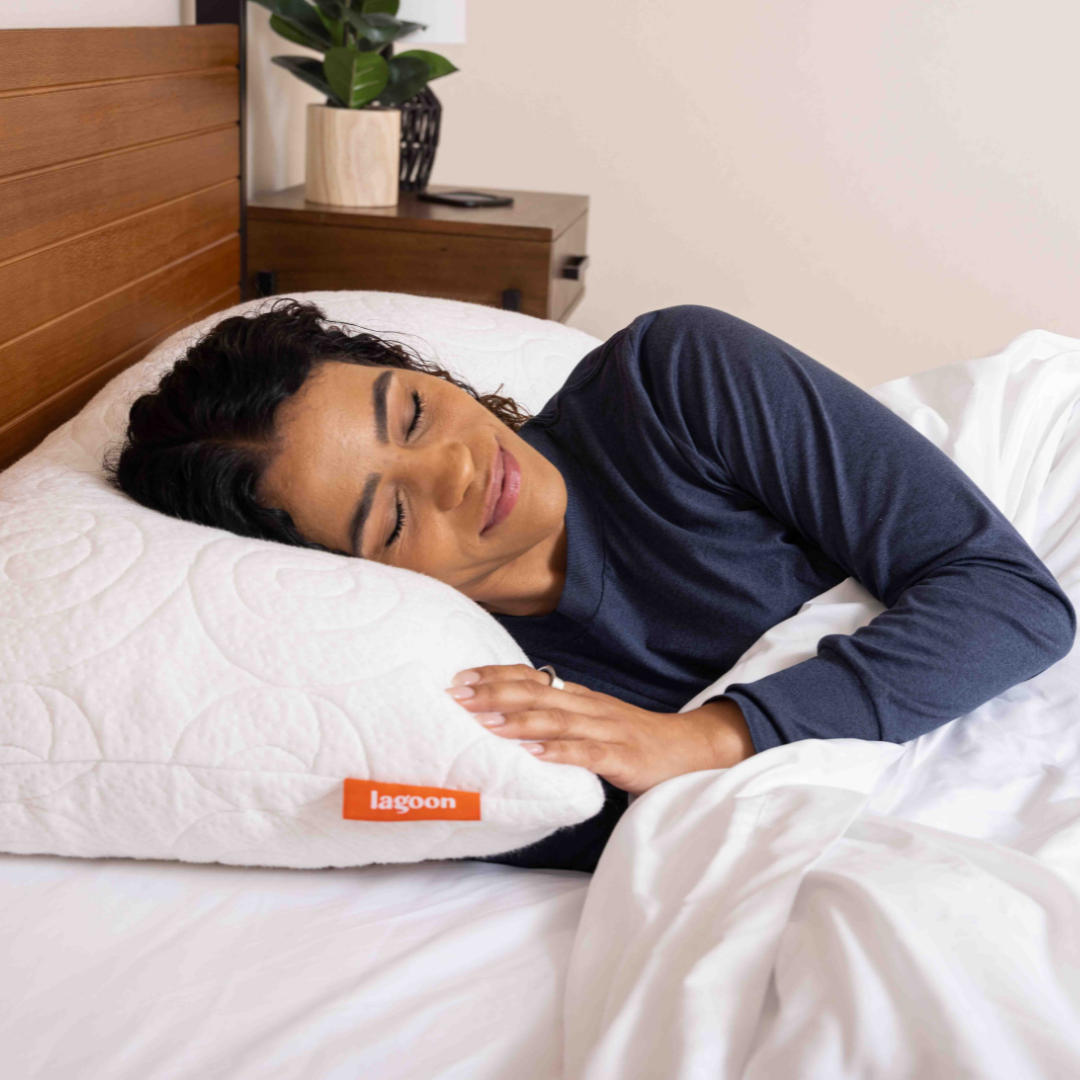



Most people choose their pillow the same way they choose a couch or blanket.
They touch it. They squeeze it. They imagine how comfortable it will feel when they first lie down.
And that’s exactly where the mistake begins.
Because pillows aren’t judged by how they feel in the first 30 seconds. They’re judged by how they perform over eight hours of unconscious recovery. What feels plush and luxurious at bedtime can quietly sabotage spinal alignment, muscle relaxation, and sleep continuity overnight.
The difference often comes down to one misunderstood tradeoff: comfort vs support.
Why Softness Feels So Convincing
Humans are wired to associate softness with safety and relaxation. In psychology, tactile softness is linked to reduced stress responses and increased perceived comfort. Studies in environmental and sensory design have shown that soft textures can reduce perceived tension and promote relaxation in controlled environments.
But sleep isn’t just about relaxation, it’s about sustained bio-mechanical support.
A pillow that feels soft and inviting when you lie down may compress significantly over time. That compression can change your head and neck alignment, forcing muscles to subtly activate to stabilize your posture while you sleep.
Instead of eight hours of muscular recovery, your body may be doing eight hours of low-level correction or compensation.
The Time-Test Problem
One of the biggest issues in sleep product selection is what I call the Time-Test Problem.
Pillows are often initially evaluated in seconds but perform over hours.
Research published in the Journal of Physical Therapy Science has shown that ergonomically appropriate pillows can significantly improve sleep quality and reduce neck pain. The key factor isn’t initial comfort, it’s maintaining cervical spine alignment across the entire sleep cycle.
As pillows compress, especially softer ones without structural support, they can allow the head to drift into positions that increase strain on surrounding muscles and connective tissues. Over time, this can contribute to:
-
Increased night-time repositioning
-
Fragmented sleep cycles
-
Morning stiffness
-
Reduced perceived sleep quality
Many people experience these symptoms without ever connecting them to their pillow choice.
The Art and Science Balance
Comfort does still matter - even if its just the real psychological component to sleep onset. If something feels unpleasant when you lie down, it can increase arousal and make falling asleep harder.
But comfort alone isn’t enough.
Think of sleep support as an intersection between subjective preference and objective biomechanics. Your brain helps you fall asleep, but your body determines whether you stay asleep and recover properly.
This is something we’ve even seen inside Lagoon’s pillow quiz. When we ask customers how soft they like their pillow, a surprising number select “I don’t know.” Not because they lack preference, but because it's hard to distinguish between what feels good when you lie down on it, vs. what effectively "does the job" throughout the night.
How Misalignment Develops Overnight
The human spine is designed to maintain a relatively neutral curve during rest. When that curve is disrupted, muscles surrounding the neck and upper back often compensate by maintaining tension.
A 2025 study noted that improper pillow height and cervical support are strongly associated with neck pain and sleep disturbances. Even small deviations in alignment can increase muscle activation and reduce relaxation during sleep.
This misalignment often develops gradually:
- A pillow feels soft and supportive when you lie down
- It compresses after one to two hours
- The head drops or tilts
- Muscles engage subtly to stabilize
- Micro-arousals increase throughout the night
You may never fully wake up, but your sleep architecture becomes fragmented.
Why Sleep Position Changes Everything
Support needs vary dramatically based on how you sleep.
Side Sleepers: The Support Gap
Side sleepers usually require the most structural support. The pillow must fill the vertical space between the head and shoulder to keep the spine straight.
If a pillow compresses too much, the head falls toward the mattress, placing strain on the upper cervical spine. This is one of the most common causes of morning neck stiffness.
Back Sleepers: Supporting the Natural Curve
Back sleepers generally need moderate support to maintain the neck’s natural curve without pushing the head too far forward. Excessively thick or rigid pillows can create forward head posture, which mirrors the strain many people experience during daytime screen use.
Stomach Sleepers: Reducing Stress, Not Eliminating It
Stomach sleeping is the most challenging position ergonomically because it forces the neck into rotation. Softer, lower-profile pillows tend to reduce stress in this position, though many sleep experts recommend gradual transitions to side sleeping for long-term spinal health.
Combination Sleepers: Adaptability Matters
Combination sleepers often need pillows that can adjust height and density depending on position changes throughout the night. Malleability becomes as important as firmness.
The 2AM Test (A Better Way to Judge Your Pillow)
Most people judge comfort at bedtime. A better evaluation happens later.
Ask yourself:
- How does your pillow feel when you wake up briefly in the middle of the night?
- How does your neck and shoulder feel at 7AM?
- Do you reposition frequently?
- Do you fold, bunch, or put your hand under your pillow for support?
These are often signs your pillow feels comfortable initially but lacks overnight support.
Why Support Improves Sleep Quality
Proper spinal alignment reduces muscle guarding and allows the nervous system to fully downshift during sleep. Reduced tension improves circulation, decreases pressure points, and helps maintain stable sleep cycles.
Research from the National Sleep Foundation and multiple sleep medicine studies consistently show that physical comfort and spinal alignment are strongly correlated with improved sleep efficiency and reduced nighttime awakenings.
In other words, support helps protect sleep continuity, which is one of the biggest drivers of recovery quality.
Understanding Sleep Ergonomics More Deeply
Comfort vs support is only part of the story. The full concept falls under sleep ergonomics - designing your sleep environment to maintain proper body alignment and minimize stress during sleep.
If you want a deeper breakdown of spinal alignment, sleep positions, and ergonomic sleep setup, you can read our complete guide on sleep ergonomics here.
Finding Your Personal Sweet Spot
There is no universally perfect pillow. The right balance depends on:
- Shoulder width
- Mattress firmness
- Sleep position
- Body composition
- Personal comfort preferences
This is why adjustable pillows have gained traction in recent years. They allow sleepers to fine-tune height and density rather than relying on fixed loft designs.
The Bigger Performance Picture
Sleep is when the body performs most of its physical repair and neurological recovery. Misalignment doesn’t just create discomfort, it can limit the depth and stability of restorative sleep phases.
Over time, consistent support can improve:
- Muscle recovery
- Sleep continuity
- Morning readiness
- Training adaptation
- Cognitive performance
These improvements compound because they occur every night, not just during training or recovery sessions.
The Real Reframe
The best pillows don’t force you to choose between comfort and alignment. They balance both across the entire night.
The next time you evaluate your sleep setup, don’t just ask whether your pillow feels good when you lie down.
Ask whether it supports your body until you wake up.
Ready to Find Your Balance of Comfort and Support?
Your ideal pillow depends on how you sleep, your body structure, and your mattress environment.
You can take Lagoon’s 2-minute sleep quiz to find the pillow setup designed specifically for your recovery and alignment needs.